Say Goodnight, Gracie at Act II Playhouse

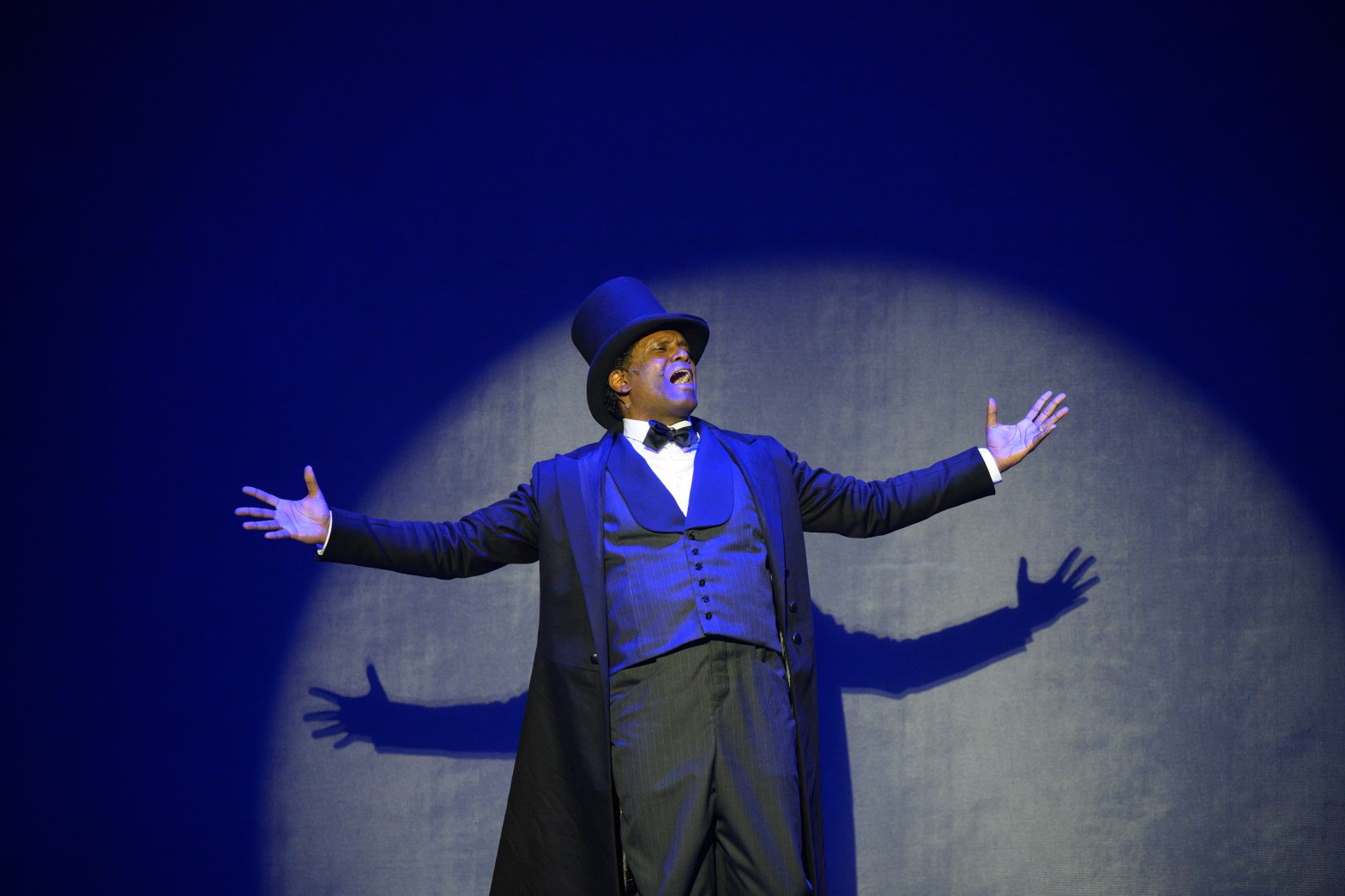
Tony Braithwaite is bringing back to the stage a character he loves, and we love watching him portray- George Burns. In two shows in 2023 and 2024, “Christmas in the Catskills,” he included Burns as one of the many comedians he presented. This time, it is 90 minutes of just Burns, one of the great straight men of comedy, as he reflects upon his life, particularly about the times with his wife and partner on stage, Gracie Allen.

            Usually, standup comedy is performed by one person, but in the days of Vaudeville and radio, there were many duos- Martin and Lewis, Laurel and Hardy, and Abbot and Costello. They even made it to television as did Burns and Allen. In the show at Act II Playhouse, there is no Gracie. She died in 1964, six years after she stopped performing, Burns having lived for another 32 years, dying at 100 years of age. Braithwaite talks with us but he also talks with her, and we feel her presence. He goes to the cemetery regularly to talk with her. We also see images of Gracie and others that are briefly projected on a wall on the set. This is a remarkable play, written by the multi-talented playwright, Rupert Holmes. He collected some of the funniest routines and meshed them with a most interesting story of the lives of Burns and Allen in his play, “Say Goodnight, Gracie.”

            Born Nathan Birnbaum, it begins as he is talking with God and looking back at his life. He lived with his parents and 11 brothers and sisters in a 3-room apartment near the Bowery in New York. When he was 7, his father died and he tried to help support the family by selling newspapers, shining shoes, and selling ice. Then, while working with other boys, they were heard singing and people threw pennies to them. Thus began a career in show business when he was 8 years old.

            He wasn’t doing comedy. He was singing and dancing, but he began working with others as he tried to expand his repertoire. When he met Gracie in 1922, he was without a partner and they decided to work together, with Burns writing the comedy for their sketch. He got no laughs. She got plenty. It was then that he realized that she was the natural comedian, and the rest is showbusiness history as they performed together for 36 years.

            Braithwaite both describes and acts out some of their bits. Burns loved her voice. He loved her acting ability. And he loved the manner in which he could start her going on stage by just asking, “how’s your brother.”  In one bit, he asks her why she was under the bed when he entered the room, and she replies that someone told her to read Dr. Jekyll and Hyde,” and she was doing that. She murdered language so naturally that it’s hard not to laugh at all her funny screw ups.

We travel with the two as they go from place to place around the country, then to radio, and finally tv. There is more after Gracie passes away as Burns’ career continued for three more decades. It’s hard to fathom how so much was packed into 90 minutes! Written in 2003, it was the third longest solo performance show in Broadway history with Frank Gorshin as George Burns. I can’t imagine anyone but Braithwaite in the role. He captures the essence of Burns’ style and his voice. And he keeps us laughing throughout.

Many of the shows are already sold out so I suggest you get your tickets soon to this funny, sweet masterpiece by a master himself, Tony Braithwaite.

“Say Goodnight, Gracie” by Rupert Holmes at Act II Playhouse, 56 E. Butler Avenue., Ambler, PA 19002, 215-654-0200,  act2.org   thru May 3,, 2026

Jelly’s Last Jam at Bristol Riverside Theatre

What an interesting title- “Jelly’s Last Jam!” It is not about a condiment to be spread on toast. It is about a man, born around 1890 into a Creole New Orleans community and the music he created. It is about Ferdinand Joseph LaMothe, better known as Jelly Roll Morton, the self-proclaimed founder of jazz in the early 20th century. This award-winning show, with the book about his life, written by the brilliant George C. Wolfe, “Jelly’s Last Jam” opened on Broadway in 1992 and is now appearing on the Bristol Riverside stage.

            It is called “Jelly’s Last Jam” because Jelly Roll would create no more music. It is his last jam because he is gone… dead, and the mysterious Chimney Man (Forrest McClendon) is about to take him through many of the key moments of his life, from time he was kicked out of his grandmother’s house (his father had deserted the family, and his mother had died) because he was working in brothels in New Orleans, to his friendships and lovers as he moved from city to city performing. We travel with Jelly Roll through his life story.

            Jelly Roll Morton was a Louisiana Creole, resulting from a mix of races between African Americans and French White ancestry. The lighter skinned offspring often tried to hide their Black heritage. Throughout his life, Jelly Roll struggled with his color, fearing he wouldn’t be accepted. And at one point, because of his jealousy, he denigrates a Black friend by calling him a nigga.

            If you don’t know much about Jelly Roll’s life, you will learn a lot, even though Jelly Roll himself is denying much of the interpretation. He was always a braggart and didn’t like anything negative said about him. Sadly, during his life, he didn’t get the appreciation he deserved.

            We see his interaction with Anita, whom he didn’t treat with respect. We see his interaction with the White men who control his bookings. And of course, we hear his music. Sadly, I wasn’t familiar with the songs, and I struggle with hearing the lyrics when the band plays loud, and the mics are not turned up. But I didn’t care because what I was watching on the stage was so mesmerizing. The beautiful dancers were extraordinary. Taps choreographer DeWitt Fleming, Jr. deserve an award for what he did with the many dancers. I could have watched them without the songs. The costumes, designed by Levonne Lindsay were gorgeous! And though the actors sat at the piano miming the playing, upstage was the outstanding piano player/conductor/Musical director, Victoria Theodore, who created these remarkable, musical scenes and played the Jelly Roll songs.

            And then there was Jelly Roll himself. Stanley Martin was so convincing in his bravado, his anger, and his passion, that I now understand so much more about this extraordinary musician. The entire cast was first rate but to name the 20 plus actors on stage would make this review too long. Thank you Tyrone L. Robinson for directing this most complicated story and making it a treat to see, learn, and just experience.

Jelly Roll Morton was the piano man long before Billy Joel. Get to Bristol Riverside and see this staging of Jelly’s Last Jam. You’ll be talking about it for a long time. “Jelly’s Last Jam” book by George C. Wolfe, lyrics by Susan Birkenhead, music by Jelly Roll Morton and Luther Henderson, at Bristol Riverside Theatre, 120 Radcliffe St., Bristol, PA 19007, 215-785-0100, brstage.org,  thru April 26,, 2026

Can’t Forget About You at Inis Nua Theatre

A friend told me about a production that she loved at Inis Nua Theatre that was going to close after a three-week run this weekend. I was scheduled to go to plays on Thursday, Friday, and Saturday this week and the only way I could squeeze it in was to attend on Wednesday, to see “Can’t Forget About You,” though it was too late to write a review. I loved it so much that I had to tell everyone that it was the best show I’d seen in many months. So here it is.

            “Can’t Forget About You,” by George Ireland, which first opened in 2013, and is making its American premiere, is a comedy. But it’s not a silly comedy. It’s sensitive and real as it deals with loss. Stevie (Adam Howard) is grieving over the the loss of his girlfriend. He is 25. Though it is years after her husband left her, Stevie’s sister Rebecca (Alice Yorke) is dealing with that. Even their mother, Dorothy (Megan Belwoar), a religious Protestant in East Belfast (where the play takes place), is struggling in her way. She was pregnant with Stevie when her husband died. And then there is Martha (Genevieve Porter), who Stevie meets in a Starbucks. She is still in therapy after losing her husband seven years before. Sound grim? It’s not. She is old enough to be Stevie’s mother, yet they become involved.

            Ireland’s play is about sex and love- more about sex. . It’s about religion but it is not a religious play. It’s as much about the rejection of religion and alternatives to it. It’s mostly about discovery as the characters develop and learn things about each other and about themselves. And we are laughing through these discoveries and nodding our heads “yes” as the story moves along.

            And move along it does as the play has many locations. The fluid changing of the set pieces is a treat to watch. Kudos to set designer Nick Embree! And thank you, Melanie Julian for giving the actors the lilt of the Irish dialogue without making it challenging to understand. But most of all, I can’t say enough about the outstanding direction of the play by the theater company’s artistic director, Kathryn MacMillan.

            Comedy is a very personal thing. To lead a cast that is making jokes about sex and love, loss and grieving, religion and atheism, is a challenging task to make it all seem real. MacMillan has done it. It is not a spitfire of jokes flying at us. She has found the moments to reflect and the moments to respond. And with this outstanding cast, we are watching not just the talkers, but those on stage who are responding with so many different expressions.

            I am so glad I went to this unique comedy. I can’t believe that it took 13 years to reach an American stage. Thank you, Inis Nua for giving me what might be the best play in Philadelphia for 2026!

“Can’t Forget About You” by David Ireland at Inis Nua Theatre Company at The Proscenium Stage at the Drake, 302 S. Hicks St., Phila., PA 19102, 215-454-9776, inisnuatheatre.org,  thru April 5,, 2026

The Most Spectacularly Lamentable Trial of Miz Martha Washington at The Wilma Theater

            Martha Washington, the widow of George Washington, is in her final days. We see her being cared for by her slaves, of which she possessed many. She passes out. Is she dead, we wonder. Soon we realize that she is immersed in an intense, surreal dream- a fever dream, where she has to deal with her role as a slave owner. This unusual play by Pulitzer Prize-winning playwright James Ijames at the Wilma Theater, is a different look at those days in 1802, blending historical fiction from a different point of view.  What an extraordinary storyteller Ijames is!

            My own knowledge of Martha Washington is very limited. I knew her only through a a classic portrait of her that hangs in the National Gallery. But Nancy Boykin gives life to her.  She enters a dream wherein six of her slaves are caring for her. But are they caring for her or do they want her to die? For when she passes, according to her husband’s will, these and others will be set free.

            Martha is not some stupid woman from the South. She actually does care for the people who serve her. But does that make a difference? At the start of the play, before she falls into her dream-state, she complains that her eyes bother her, and she can’t see. This is clearly a metaphor for the woman we arout to learn about, who can’t see.

            In the dream, she is an observer. She watches and listens as her slaves describe their lives, but still thinks they have the best life they can have as her slaves. She still calls the men, “boys.” But other times, she joins them in a dance as if she is one of them. When she talks to some, she allows them to lie in bed beside her.  What is real and what is not?

            Then, there is her personal servant/slave Ann. She is light skinned, and we see that in this story, she is the half-sister of Martha, the daughter of Martha’s father. Does Martha accept that and of the other children born of slave women and their white male owners?

            There is one scene where the slaves are playing a 21st century quiz show game that makes no sense… but it is amusing, and it works! Then there is the scene where she is put on trial in a modern courtroom. Crazy, but effective in a bizarre way. But no crazier than when the characters of Thomas Jefferson, Abigail Adams, and Betsy Ross also take the stage as portrayed by this fine ensemble. To top it off, her husband, George Washington testifies in the courtroom as well.

            There is so much to absorb in this 90-minute play, and it will hold your attention for most of it (there were some over-the-top comedy scenes that went on a bit too long). But the powerful discussion of slavery and Martha’s response to it will leave you thinking about it for a long time. Kudos to the Wilma and to director Brett Ashley Robinson for bringing to their stage, “The Most Spectacularly Lamentable Trial of Miz Martha Washington,” this remarkable and unusual play by James Ijames!

“The Most Spectacularly Lamentable Trial of Miz Martha Washington” by James Ijames, at Wilma Theater, 265 S. Broad St., Philadelphia, PA 19107, 215-546-7824  wilmatheater.org    Thru April 5, 2026

The Weir at The Irish Heritage Theatre

            “The Weir” takes place in Paddy Byrne’s Pub in a rural Irish town, where the locals are exchanging weird, spooky, and humorous stories.  It can be they are trying to impress Valerie, a newcomer in town, brought to the bar by their friend, Finbar, but I am sure they come regularly here to meet, drink, and tell stories.  

            In this award-winning play by Conor McPherson, first staged in 1997, the owner of the pub, Brendan (Aiden McDonald), listens as three regulars, Jack, Jim, and Finbar tell stories to Valerie. They are ghost stories. They are horror stories. It is not a play with much action, but rather some long, fascinating monologues about people, about cemeteries, and about life as they down their drinks. Ironically, when asked what she would like to drink, she says “white wine.” They have no wine, but Brendan manages to locate an old bottle in his house that is attached to the pub.

            The first to arrive at the pub is Jack (Brian Rock) and he engages Brendan with background story that I am sad to say, I missed. He was talking so fast with the Irish brogue that I didn’t understand half of what he was saying. I know that they were trying to recreate an intimate scene in a friendly space, but the Plays and Players Theater’s ceiling is about 30 feet high and much gets lost if an actor doesn’t project louder than just a natural speaking voice. I have seen many plays at this venue with no difficulty, but Jack’s talking might as well have been in another language. Probably the rehearsals took place in a smaller space where the director was closer to the actors, and they could speak in softer tones. When I struggle to understand what is going on in a play with just story-telling and no action, if I don’t succeed, I zone out. And many of the other characters also spoke quickly. The acting was more about the accent than about the substance. I had the same problem with Jim (Oliver Donahue).

            When Finbar (Robert Hargraves) arrives with Valerie (Kirsten Quinn), things become a bit clearer. They speak more slowly and with less of an accent. And when he launches into his lengthy ghost story about an eerie woman appearing on the stairs of a house who stares at the occupants and a neighbor seeing a dead person in the garden, I followed most, but not all, of his strange narrative. Valerie listens attentively, then shares her own story. It is not filled with supernatural or magical events like the men’s stories. Rather, it is a most sad telling of her own recent life. The mood changes.

            The story is a powerful one and I suggest that if you go, grab a seat close to the stage so you catch all the words. I found that in my seat in the sixth row, that those seated closer to the stage laughed at jokes that those behind me didn’t respond to. And I do wish that Director Peggy Mecham managed to pull more from the actors emotionally.

“The Weir” by Conor McPherson at The Irish Heritage Theatre being performed at Plays and Players Theatre, 1714 Delancey St., Philadelphia, PA 19103, 215-680-3876                     

www. irishheritagetheatre.org   Thru March 29, 2026

Marsha Blovotnick and the Marvelous Magical Chicken Soup at Theatre Ariel

Theatre Ariel is a professional theater in Philadelphia that has produced plays about Jewish history and culture for over thirty years. Their current show, on stage at the Louis Bluver Theatre at the Drake, is a world premier written by Dan Kitrosser, an award winning playwright, screenwriter, and story teller. In this play, the title alone drew me in.

            “Marsha Blovotnick and the Marvelous Magical Chicken Soup” is a funny play but I wouldn’t call it a comedy. It deals with Masha (Janis Dardaris), an angry woman who is angry about everything, from her sister, to her ex-lovers, to the situation in the world she lives in.  As a socialist, lesbian Jewish theater owner in the home she has lived in since childhood, she has failed financially to support that theater, which was housed in her very home. She is dealing with the fact that her sister Janice (Susan Riley Stevens), who she has been estranged from for many years, is coming to the house to share a Shabbat dinner with her. Marsha wants no part of her. But before she arrives, Marsha realizes that she has forgotten to make the chicken soup, a staple in their Shabbat diners since childhood.

            What makes this play so powerful is how it deals with universal themes so naturally. Though Janice and Marsha were raised in the same home by their father, Janice has rejected that life of political and social action and married and moved away to the suburbs with her husband. There, they had a son, who is gay and married another man and we learn of his life when he also drops in at Marsha’s that evening. Marsha even argues with Jonathan (Mason Rosenthal), but he is so insecure, he doesn’t fight back

            Another surprise visitor is Lilith (Jennifer Summerfield), Marsha’s third ex-wife, who has come by to collect her things. Marsha and she disagree on so many things, but then again, Marsha disagrees with everyone about almost everything. She is frustrated. She is unhappy. She is angry. And we realize that we share much of her anger. And that is what makes this play so engaging.

            The sisters have real problems, from the cancers that both had, to the fate of the family home. We wonder if anything can be resolved as Janice tries to forgive her sister.

            And then, to top it off, there is Chorus, a Jesus or Moses-like character who serves as an on-stage narrator and also as Marsha’s conscience at times. Chorus (Adam Pelta-Pauls) explains things, he anticipates actions. And he reminds us of the possible cure-all for not only the problems faced by the characters in the play, but of the problems of the world- chicken soup. Yes, chicken soup, the Jewish penicillin.

            This wonderful 90-minute play by Dan Kitrosser is a play that relates to us all. The friend who accompanied me was laughing and loving it as much as everyone in the sold-out theater. And she’s not Jewish. I enjoyed listening to each character and identified with them all. Dardaris was great! Stevens was great! Pelta-Pauls was great! They were all great!! Director Jesse Bernstein has developed this dynamic little play into a small epic that is sure to be grabbed by other theaters around the country for production.

“Marsha Blovotnick and the Marvelous Magical Chicken Soup” by Dan Kitrosser at Theatre Ariel being performed at The Louis Bluver Theatre, 302 S. Hicks St., Philadelphia 19102, 610-667-9230, Info@TheatreAriel.org    Extended thru March 29, 2026

Twelfth Night at People’s Light

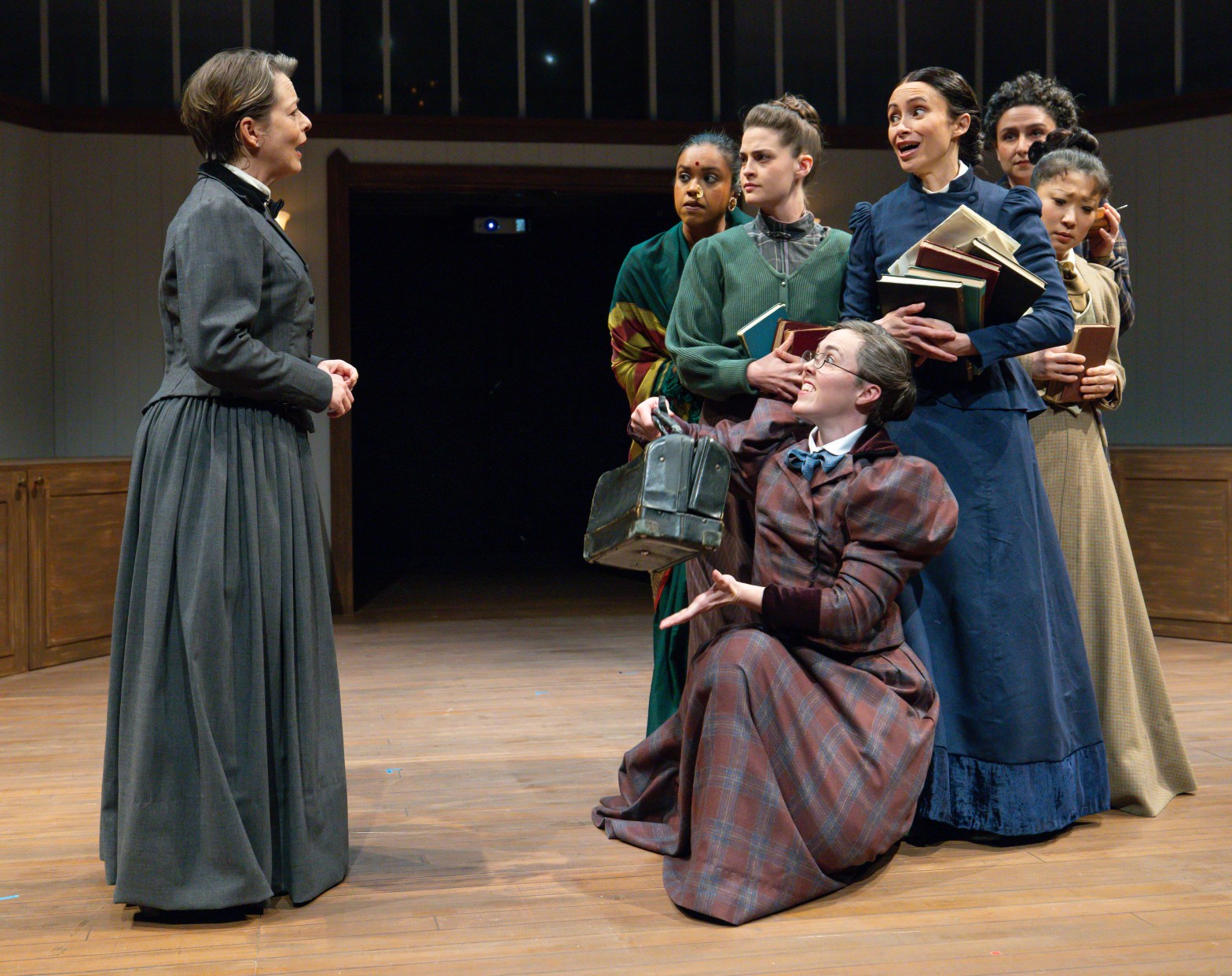
People’s Light proclaims in its release that they are presenting a William Shakespeare play that “Explores Love, Power, and Identity.” I was ready for it because after seeing several of the bard’s tragedies in the past year, I was looking forward to the comedy that “Twelfth Night” is.

I often have trouble seeing plays by Shakespeare, and my most recent experiences were not favorable- actors just recited their lines. But “Twelfth Night,” on the stage at People’s Light, while not a comedy that keeps you laughing, IS smart and engaging. This topsy turvy play holds your interest once you get past the old language. And this rendition, a recent adaptation by Andrew Watring, who also directs it, is outstanding!

It begins with Viola being brought ashore after surviving a shipwreck off the coast of Illyria. In order to survive, she disguises herself as a man to work for the Duke of Orsino. The duke is in love with Olivia and uses Viola, who now goes under the name of Cesario, to tell Olivia of the Duke’s love.  But Olivia falls in love with Cesario, not realizing that he is a she. Meanwhile, Viola falls in love with the duke, who in this modern version, is not a duke, but a hotel owner at the luxury Duke’s Palace Hotel in Croatia.

Then, there is a secondary story.  Malvolio, who in the original, worked for Olivia, is on Orsino’s staff. In both versions, Malvolio is misled to believe that Olivia has a crush on him, as two other guests, Toby and Andrew, seek to humiliate him. It is rather broad slapstick with many sexual references. There is the fool, Feste, who in typical Shakespearean literature, is probably the wisest man on stage as he observes the goings on through his songs.

I was a bit confused for a time as to what was going on in what seemed like a set of wild stories, but was told by another person in the audience, that I was supposed to be confused.

Everything is out of joint. But through it all, I found it visually stunning, and the acting of the ensemble was first rate as this modern production captures the essence of the play by the Bard of Avon. I would offer two suggestions The first act is presented in an hour and a half and the second is less than an hour. I would have liked that for that first act to have been divided into two shorter acts, giving me more time to digest what was going on. But I did love the little adjustments made by Watring, which I dare not reveal. See for yourself how this game of musical chairs turns out.

One more suggestion before you go to see this unique, outstanding production. Read a summary of the play and get there early so you can read the most informative of programs.

“Twelfth Night” by William Shakespeare adapted by Andrew Watring at People’s Light, 39 Conestoga Rd., Malvern, PA 19355, 610-644-3500, peopleslight.org   Thru March 29, 2026

Tartuffe at Kammerspiel

Moliere’s “Tartuffe,” written in 1664, is one of the most famous comedies of the stage and has seen many adaptations over the last 350 years. It was initially banned because it dealt with religious hypocrisy. There was a recent one in an Off-Broadway production with Matthew Broderick. A new version of the farce, adapted by Bob Sloan, presented by Kammerspiel, premiers at the Performance Garage in Fairmount for a very brief run.

            It’s the story of a man and his family after Tartuffe arrives in town. The father, Orgon (Nathaniel Crosby Fishburn) and his mother, Pernelle (Dave Allison-played the role in drag), are mesmerized by Tartuffe (Connor Hogan). Orgon would do and does do anything and everything for him. But his daughters, Damis and Mariane, his sister Cleante, and his wife, Elmire, all see through the thin veneer of the lying, self-serving Tartuffe.

            We don’t even meet Tartuffe until 20 minutes into the play. All we know about him is from the banter, back and forth, amongst the other characters. And what banter it is. The original play consisted of clever rhyming couplets, sometimes within a character’s lines, other times, the rhyme is from single lines between two characters. It is smart. It is clever. This version of the play is new. It takes place today. Looking up the play on-line, I see its themes were faithful to the original even though Organ’s brother and son in the original were recreated as his sister and daughter. But wait! The original was in French. The translators of the play would have to find similar words that rhymed. Sloan has done a masterful job in updating it in rhyme and in telling the story.

            That story consists of Orgon’s family trying to expose the selfish, ruthless, Tartuffe. The other side of the story is Orgon defending everything about Tartuffe, in spite of the latter’s chicanery. Orgon even wants his daughter to break off her planned wedding with Valere and marry Tartuffe. When his other daughter, Damis objects strongly to her father’s idolization, he writes her out of his will.

            Orgon’s wife sees all the hypocrisy that Orgon doesn’t see. She tries to set a trap for Tartuffe and puts her husband under a table to watch.

            “Tartuffe” is being revised often these days because of the similarity between the play, and what is going on in this county- blind devotion to a person despite overwhelming evidence of his treachery.

            The story unfolds on a bare stage except for a table and two benches. They don’t need more. What the actors needed to make this a more compelling play, was direction on how to recite the couplets. It lacked drama. It didn’t help define the characters. Orgon is portrayed as a fool- no depth at all. Tartuffe was often just rapidly reciting lines. I didn’t feel the ominous threat. But then again, neither do many Americans feel that threat today. Listening to him became tiring, and I just tuned out for short stretches.

            One of my favorites in the play was the maid Dorin (Jennifer Summerfield), as she tries  to help Orgon’s daughters and expose Tartuffe. Another favorite was Orgon’s wife, Elmire (Deborah Crocker), an interesting and real person. But often, I felt like the characters were acting in completely different plays. It’s supposed to be a farce. I didn’t find myself laughing often.

            The Kammerspiel is a new theater in Philadelphia, and I was hesitant to criticize the production because I do want the company to succeed. But that’s what a critic does. As I said, this new version of the play is a good one.

“Tartuffe” by Moliere in a new version by Bob Sloan, at Kammerspiel  at Performance Garage, 1515 Brandywine St., Philadelphia PA, 215-569-4060, Tickets at performancegarage.org/performances  Thru March 8, 2026

Blues for an Alabama Sky at Lantern Theater

            Pearl Cleage is an African-American writer. She is a novelist, an essayist, and a poet. She is a political activist writing and speaking out about racism and sexism. She is also a brilliant playwright who penned three remarkable plays in the 1990’s. Lantern Theater is presenting one of those, “Blues for an Alabama Sky,” on its intimate stage. It is a fascinating play about four people in Harlem in 1930 who are wrestling with financial hardships, sexuality, love, and dreams. It is most captivating.

We meet Angel (Ebony Pullum), a jazz singer, whose gangster boyfriend has left her and she was fired from her singing job. She moves in with her gay friend Guy (Cookie Diorio), a costume designer who seeks to move to Paris and design for Josephine Baker. Across the hall in the same apartment building is Delia (Taylor J. Mitchell), a social worker who wants to set up a family planning center in Harlem and believes it’s a woman’s right to choose whether or not to have a baby. And then there is Doctor Sam (Kash Goins), a friend to all. Into their lives comes Leland (Tariq Kanu), who’s recently arrived from Alabama.  A most attractive man, he had just lost his wife and baby during childbirth and is smitten with Angel, who looks like his wife.

Cleage creates drama behind each of her characters. The most flamboyant is Guy, who is constantly commenting on the clothes of others in a most humorous way. The neighbor, Delia is struggling with a community that fights her in her goal to achieve birth control for women. Doc is without a partner and would love to make it with Delia. He has had lovers, but he wants love. At the beginning of the play, he has just arrived after delivering twins. He is exhausted after working such long hours but is a very good listener and a compassionate man.

Angel is the centerpiece of this tale. She is so frustrated. She seeks employment most anywhere for a while, but it is the depression, and work is hard to find. She just wants to sing again. But she also need money just to eat and pay part of the rent. When Leland arrives, he is smooth talking, he has money, and he wants her. What should she do?

It’s not an easy answer. At first, she overlooks his ultra-conservatism regarding women, but then, this rather religious man has issues with Guy’s sexuality. Guy is her best friend. More issues arise and decisions must be made that will affect them all.

This masterpiece, a work of historical fiction, where the characters are coming into contact (not on stage) with the likes of Josephine Baker, Langston Hughes, Adam Clayton Powell, Sr., and Margaret Sanger, is so believable, you’d swear it was an actual true story. Director Brett Ashley Robinson has done an outstanding job in putting together this complex play by Pearl Cleage!

“Blues for an Alabama Sky” by Pearl Cleage at Lantern Theater Company at St. Stephen’s Theater, 923 Ludlow St., Philadelphia, PA 19107. 215-829-0399   lanterntheater.org   thru March 15, 2026

The Garbologists at Montgomery Theater

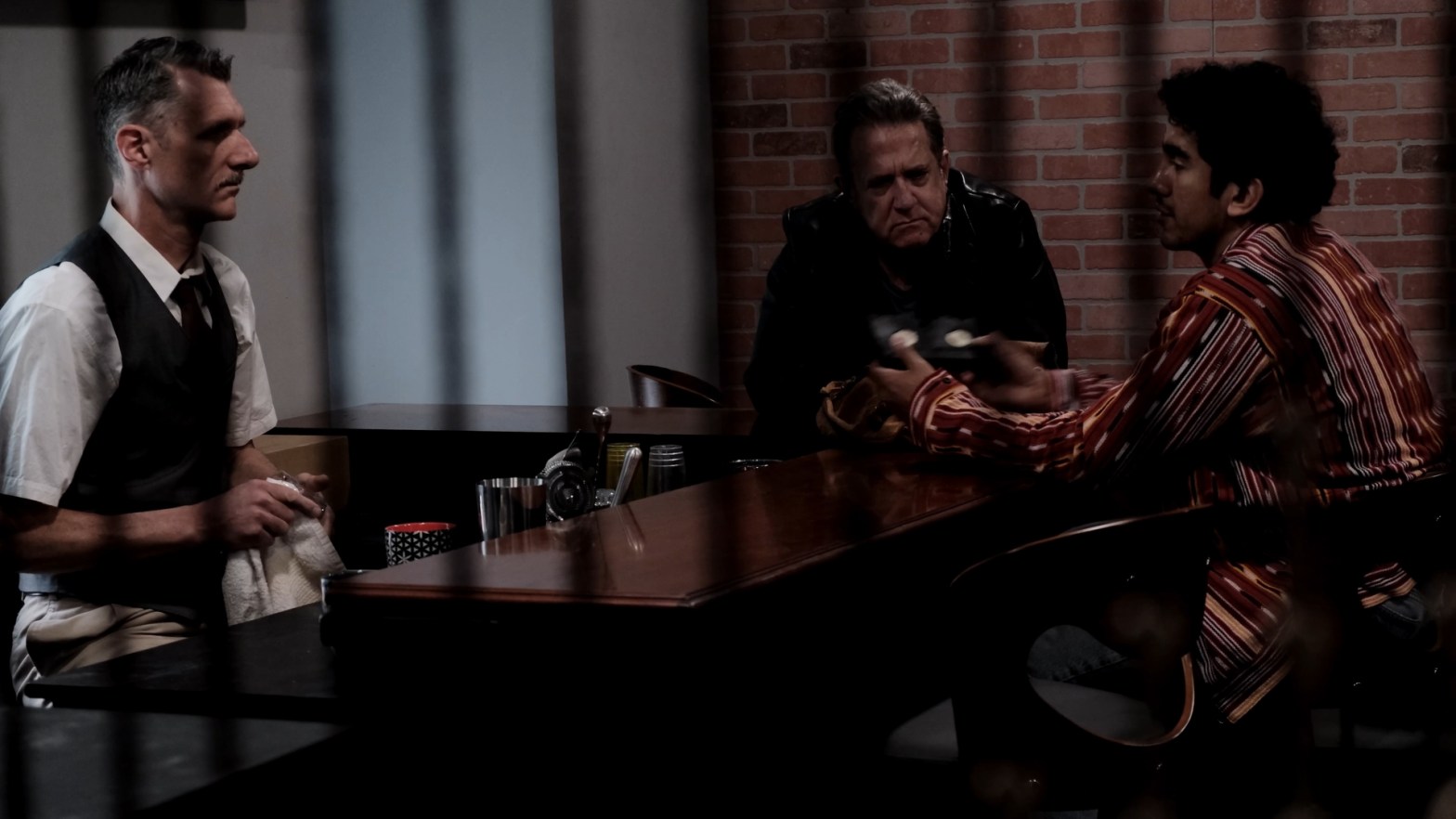
Two New York City sanitation workers are assigned to work together on a route. Danny, a blue collar divorced father, has been driving garbage trucks for years. Marlowe is an African-American woman, with a Master’s from Columbia University who we are not certain as to why she has taken such a job. He jabbers on and on while she remains quiet, clearly avoiding expressing anything about her life- polar opposites. Will they find common ground as they ride in the cab of the truck and pile trash into the back of it?  That is the story behind “The Garbologist,” by Lindsay Joelle, now running at Montgomery Theater in Souderton.

            Initially, we listen to Danny rant about everything as they ride in the truck.  In the second scene, we see them collecting the garbage. He keeps telling her the way to pick up the bags and how to toss them. Though it is humorous to us, Marlowe is not amused. She doesn’t want his help in any way. She wants to do the job alone and let him just drive. It does become interesting as he tells her about what he has learned from people’s garbage. We learn the word “mongo” from Danny. It is the art of discovering treasures in people’s trash. And Marlowe creates the word “garbologist,” a person who studies or is an expert in garbage.

            He tells her about how his ex-wife pulled their son away from him, as if it is the worst thing in the world until she blurts out that her 4-year-old son is dead.

            As expected, they do start to relate to each other. And Marlowe is thrilled when Danny gives her a book that he found in the trash and that she recognizes as an artifact of great value that she can sell. She is heavily in debt. She even agrees to have a drink with him. But when he discovers the value of the book, he wants a piece of the selling price.

            It’s a good story and Matt Pfeiffer and Noelle Diane Johnson give outstanding performances in the play. But while “The Garbologist” is interesting, somehow it is also rather formulaic and lacks the emotional subtext thats needed to make me care more deeply about the characters. If this were the play’s premiere, I would hope that playwright, Joelle, would work on it further to give it more depth. But alas, it has been around for three years. Her play is good. I wanted it to be better.

“The Garbologists” by Lindsay Joelle at Montgomery Theater, 124 Main Street, Souderton, PA 18964. 215-723-9984   montgomerytheater.org   thru March 8, 2026