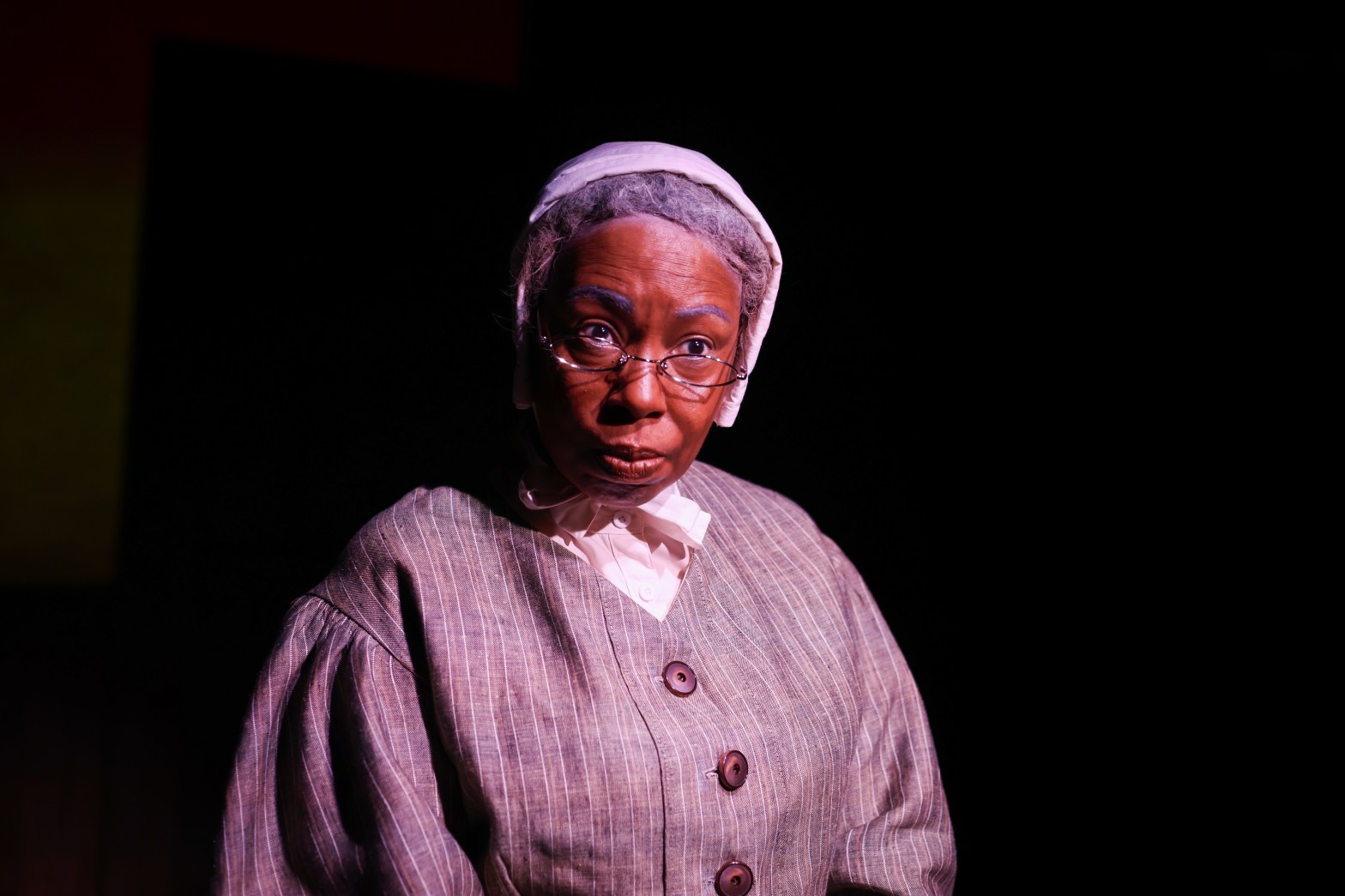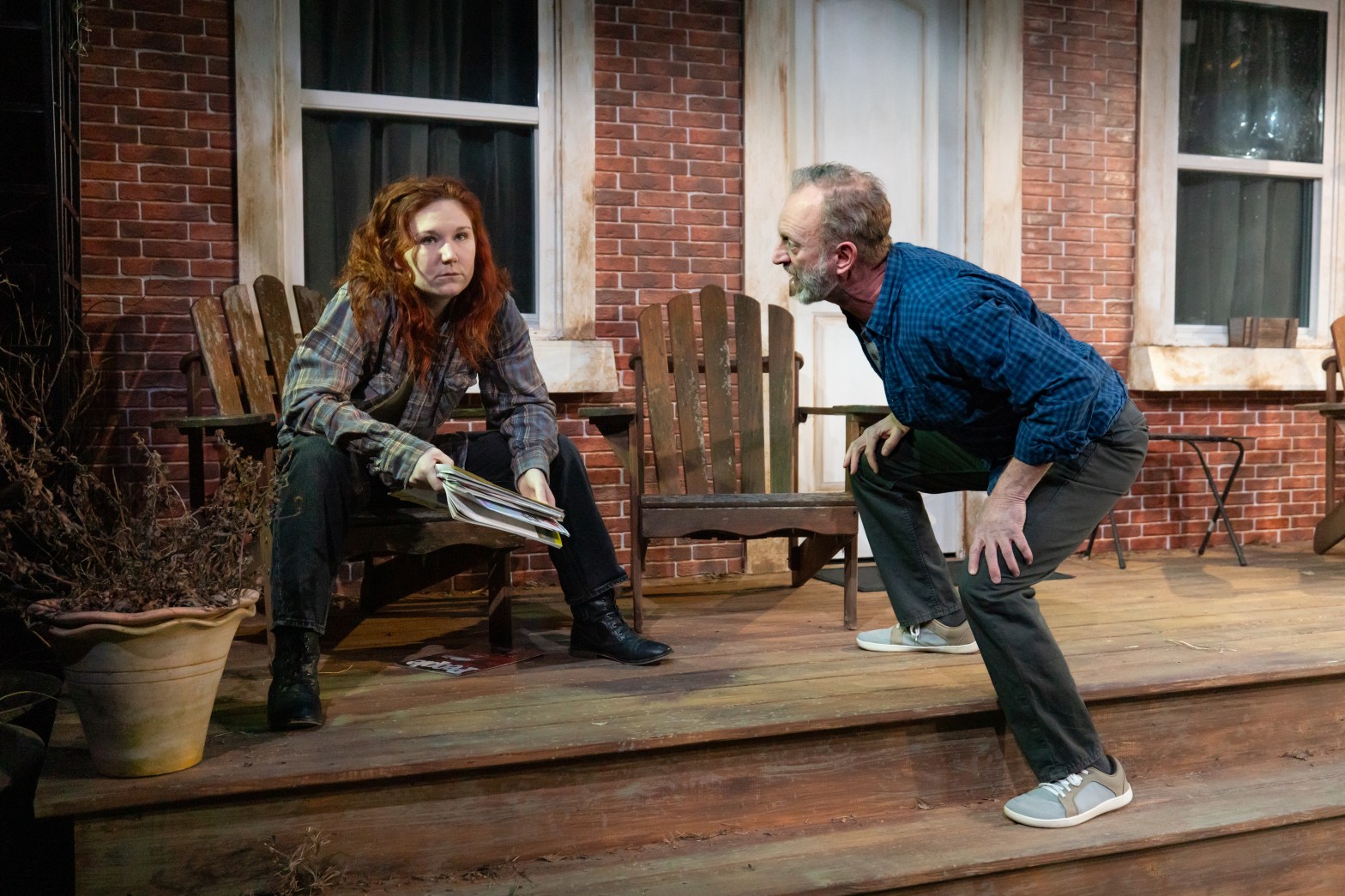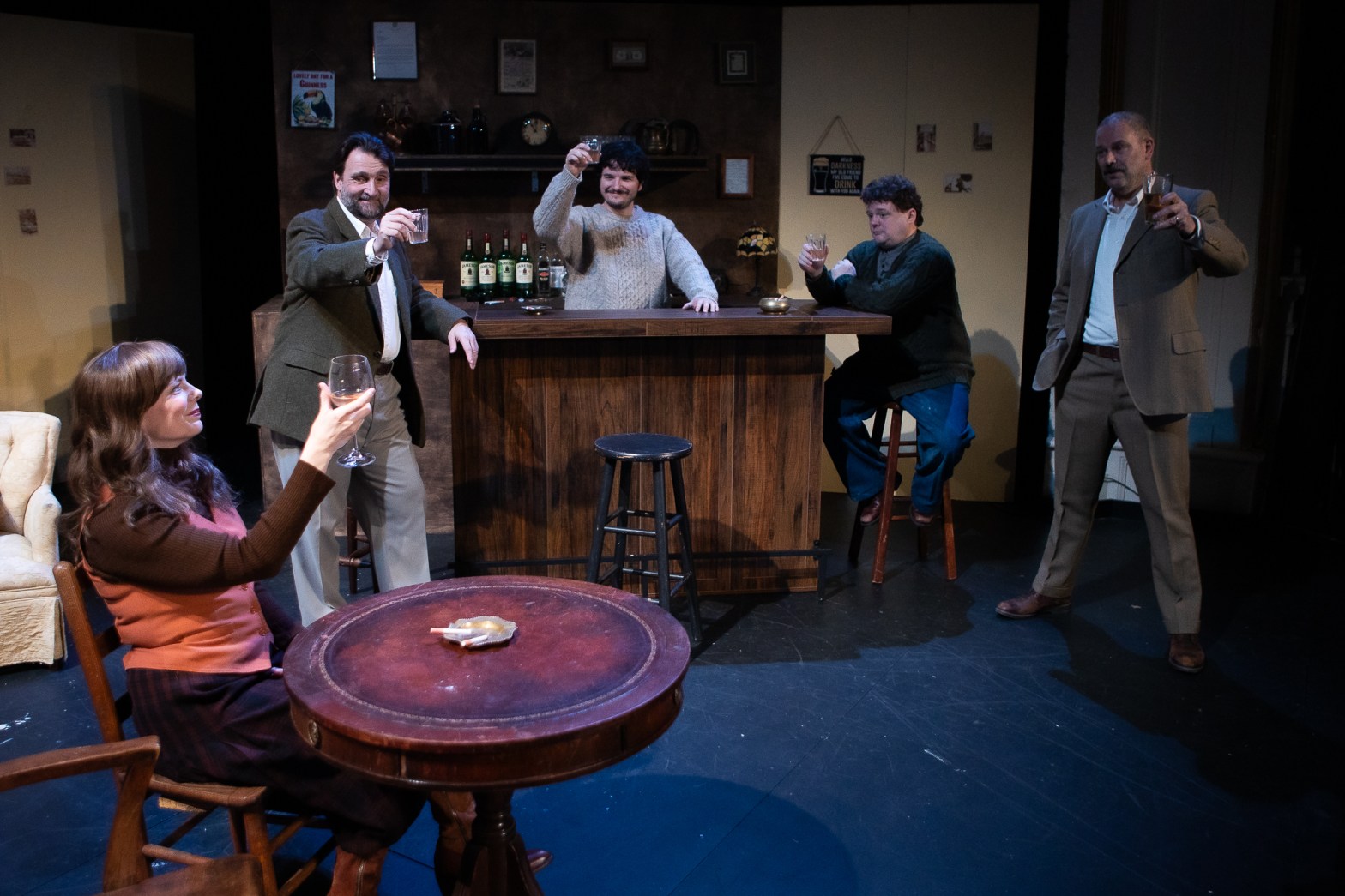
Proof at Act II Playhouse

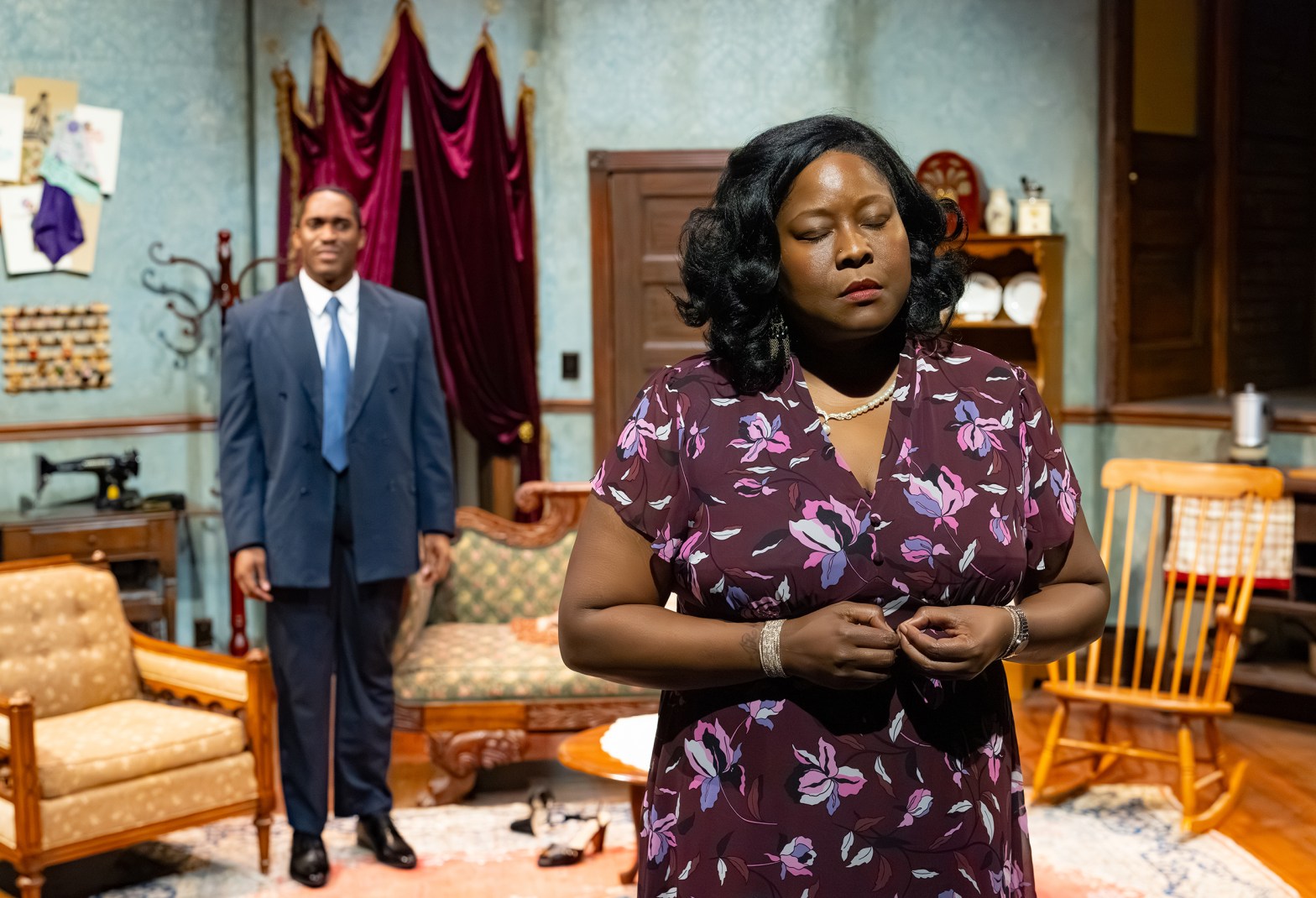
“Proof” is the story of Catherine, a gifted young mathematician, as she and her sister Claire, are dealing with the death of their recently deceased father, a brilliant mathematician himself, though a bit unstable. Catherine had given up her college and her plans for the future to return home five years earlier to care for Robert. Hal, a former student of Robert’s, and now a Math Professor himself, is also on the scene. He is seeking any enlightening research in the attic where Robert kept meticulous records of these last five years. Claire simply wants to get Catherine out of the house, for she fears her younger sister is a bit deranged and cannot care for herself. She also wants to sell the house.

 What is discovered is a journal of profound importance of a mathematical proof in a desk upstairs. How could he have written such a piece given his condition? Did he write it, or was it the work of his daughter, Catherine? It is one of the major factors that drives this Pulitzer Prize and Tony award winning drama by David Auburn from 2001, which is on the stage at Act II Playhouse this month. Their cast of four give a powerful presentation of Auburn’s play!

            It opens with Catherine talking and laughing with her father. We then realize that this is a dream of Catherine’s. There are eight more scenes in this two-act play where we see the struggling relationships between the sisters and, between Catherine and Hal, who develop an attraction for each other. And then, there is the dealing with a parent who was once one of the leading minds in the field of mathematics, but in his last years, was, often confused.

            There is also the main substory about the authorship of the newly discovered work. They want to dismiss the idea that a young girl with a half semester of college could have written such a paper.

            While the core of the story takes place during the weekend of the funeral for Robert, we learn so much as we actually see Robert in two flashback scenes. I loved Scott Langdon’s portrayal of Robert. It was not one of a crazy, looney man but of a genuine person, a kind person, who is still smart, as he loses his sharp analytical powers.

            I loved all the portrayals by the actors. Megan McDermott brings a practical, no-nonsense quality to Claire as she seeks a logical way out of the dilemmas she is confronted with. Adam Howard portrays Hal in a most genuine manner, even though he has geekish qualities. We love the brief romance between him and Catherine even though we have trouble with his disbelief in the fact that she, a woman, is the author of the new proof.

            And I can’t say enough about Jenna Kuerzi’s Catherine. She is portraying a woman who has had no life for five years outside of caring for her father. She has no friends. She has gone nowhere. She’s a bit of a geek herself. And she constantly worries that she is so much like her father that she will eventually inherit his mental illness. But she is so real that we soon identify with her and feel her struggles.

            Director Kate Brennan has given us a play that won many awards but can easily be presented superficially. There is nothing superficial about this staging. She has found the perfect cast, and we can see why it won so many awards in her masterful direction of this powerful drama.

            An afterthought: “Proof” is reopening on Broadway this Spring for 16 weeks where the tickets begin at $144. At Act II, they start at $35, and I can’t imagine a production better than theirs.

“Proof” by David Auburn at Act II Playhouse, 56 E. Butler Avenue., Ambler, PA 19002, 215-654-0200,  act2.org   thru March 1,, 2026

Steel Magnolias at People’s Light

Most people know about “Steel Magnolias” from the popular film made in 1988 and released a year later with Dolly Parton, Sally Field, Julia Roberts, Shirley MacLaine, Olympia Dukakis, and Daryl Hannah. The play from which it was based opened off-Broadway in 1987 and ran for three years. Robert Harling’s play, about six women in a hair salon in the Deep South, is a tragicomedy about life- six different women with six different points of view in four scenes that take place over a span of 2 ½ years.  People’s Light has brought it to its stage this winter. The acting is so strong. I can’t imagine a better ensemble!

            We meet each of the women in the first scene. Truvy is the owner of the salon which was previously a carport before it was converted to a salon by her husband so she could work and support the family. Annelle is new in town, a young hairstylist recently hired, who is most private because of an embarrassing recent past. Shelby is the young woman who is having her hair done because she is getting married that evening. She does have a serious physical issue. She is often squabbling with her mom, M’Lynn over almost everything. M’Lynn’s husband is often firing his gun in the yard, creating noise that disturbs the neighborhood, and particularly Ouiser, the town grouch. And finally, there is the widow Clairee who shares with us so many stories of the town. And that is what these six women talk about when they get together on Saturday mornings at the salon to have their hair done.

            I saw this play performed three years ago and it was a good production. This one, directed by Abigail Adams, was great. That is because the comedy of Harling’s writing truly came through where the actors played it so naturally. Kudos to all six- Teri Lamm, Brynn Gautheir, Janis Dardaris, Claire Inie-Richards, Susan McKey, and Marcia Saunders. These are real people, not caricatures. Though they speak with a sudden dialect, it was perfectly clear to my old ears thanks to the dialect coach, Melanie Julian and these fine actors. The jokes felt honest too, just part of a normal conversation. I won’t repeat them here lest I spoil the spontaneity of the humor.

            We learn about the men who never appear, from the guy who is marrying Shelby, to the gay nephew of Clairee, to the man who brought Annnelle to town (then ripped her off). to the woman who lost her husband in World War II and her son in Vietnam. And yet through all this, they meet every Saturday to get their hair done and to just talk.

            The jokes continue in the second scene but there is more focus on Shelby’s pregnancy since she was warned by the doctor not to get pregnant because of her diabetes. Throughout it all, you don’t want to miss a word of Harling’s great script. There is so much story. And this production has it all- great set by Daniel Zimmerman, great costumes (four for each actor) by Tracy Christensen, and as I mentioned before, Director Abigail Adams who brings this amusing and powerful story together. It’s a must see!!!

“Steel Magnolias” by Robert Harling at People’s Light, 39 Conestoga Rd., Malvern, PA 19355, 610-644-3500, peopleslight.org   Thru February 15, 2026

Most Wonderful Time at Act II Playhouse

Act II Playhouse has been saving its December slot on the stage in Ambler lately for original performances of lighthearted comedy and music. They are continuing that tradition with the comedy cabaret, “Most Wonderful Time,” with its most creative Artistic Director, Tony Braithwaite, leading the cast of three. It is filled with improv sketches and with song parodies. He is accompanied by Renee McFillin and Kevin Toniazzo-Naughton and with Dan Matarazzo on the piano and also participating in many scenes. What a talented quartet bringing us Christmas cheer in these very troubled times.

            It gets off to a funny start as the instruction to the audience like turn off cell phones, is incorporated into the comic song- “Do you hear what I hear?” Then, there follow other songs including classic Christmas carols like “Santa Claus is Coming to Town,” with altered lyrics. There is a new slant on what follows after the birth of Jesus as they learn that Christmas is more about Santa Claus than about the new babe. There are Hanukkah jokes. Among my favorite was Braithwaite appearing as Johnny Carson playing Carnac the Magnificent giving answers to questions before we know the questions. It is hilarious. He also recites “Rudolph the Red Nosed Reindeer” in the voices of Jimmy Durante, Alfred Hitchcock, Katherine Hepburn, Bob Dylan, and Donald Trump.

            McFillin, besides playing more than a dozen other roles, creates the character of Anne Marie, a stereotypical young Philadelphia woman bitching about everything as only a Philly woman can. Toniazzo-Naughton, is the third member of this trio telling jokes and often leading this mini-choir, with his powerful voice. And I would be remiss if I didn’t include Matarazzo as the fourth member of the ensemble who not only accompanies the trio but who also provides many of the jokes.

            There is even a scene where they select a member of the audience and question him for a few minutes and tell him that they will make him famous. They then proceed to build a song around the information they have just collected.

            Comedy is such a personal thing. What someone laughs at, another might find less funny. I laughed out loud and some jokes. I smiled in my heart at others. And some didn’t hit as strongly, but I guarantee that you will come away from this extraordinary holiday cabaret of original new works by four gifted actors, feeling uplifted during this otherwise challenging time in our country. As Andy Williams sang and Act II players remind us, it’s a most wonderful time of the year.

“Most Wonderful Timer” created by Tony Braithwaite, Nick Cardillo, Dan Matarazzo, Renee McFillin, and Kevin Toniazzo-Naughton at Act II Playhouse, 56 E. Butler Avenue., Ambler, PA 19002, 215-654-0200,   act2.org   thru January 4,, 2026

The Pirates of Penzance at Quintessence Theatre

I’ve known about Gilbert and Sullivan’s “Pirates of Penzance” since high school but had never seen it. Premiering in New York City in 1879, it is a comic opera that in many ways, was the forerunner of modern musical theater. It is about a band of pirates, a young man, and a major general with many beautiful maiden daughters. The story is interesting but the production at Quintessence is more than interesting- it will blow your socks off.

            It is Frederic’s 21st birthday and he is about to complete his apprenticeship to the pirates he’s been with. But we learn early that Ruth, his caretaker all these years, and the only female he has ever met, had heard wrong regarding her instructions. Frederic’s parents wanted him to serve an apprenticeship not as a pirate, but as a pilot. As Frederic prepares to leave his apprenticeship, he tells the King of Pirates that he will be obliged to kill him if he doesn’t renounce his life of piracy and reenter society. The other thing that Frederic craves is to meet women to see if Ruth, 47 years old, is as beautiful as she says she is.

            When Major-General Stanley’s many beautiful maiden daughters arrive, chaos ensues. Frederic falls in love with one of them, Mabel. The pirates discover the girls and want to marry them.

And there is a problem for Frederic. Since he was born on February 29, is he really 21 (if he had one birthday every four years, he is only 5 years old), and if not, who does he owe his allegiance to? The themes of love and loyalty are ever present but so is the theme of being an orphan. There is a lot of substance in “Pirates of Penzance.”

            I can go on about the evolving story, and I do recommend you read a summary of it before you go because of the spitfire conversations done in couplets and other rhyming sequences. But that’s not what makes this production so remarkable. There are 12 actors portraying over 30 roles. Four of the women play pirates, and four of the pirates play maidens. And it works!!! Stunning costumes designed by Risa Ando and the rapid off-stage costume changes by the actors as they move between characters are flawless. And the dancing and other movements were exquisitely choreographed by Shannon Murphy.  I could have watched the show with no dialogue at all, it was so visually entertaining. Then there were the duals and the passions. Fight director (Ian Rose) and an intimacy director (K. O’Rourke)- what jobs they did! And I appreciated the accent coach, Melanie Julian, who didn’t force me to understand British accents like I do at home- with the subtitles turned on.

             I got a chance to listen to the music of Arthur Sullivan and realized that I knew some of the tunes- the funny Major-General song as well as “Hail, Hail, the Gang’s All Here.” And the four-piece orchestra, led by pianist/conductor Luke McGinnis was spot on. I know because I went with my musician friend, who is also a pianist and conductor. That leads me to the performers- singers, dancers, actors who did it all.

            Brandon Walters is outstanding as Frederic, the young man who wants to move on with his life. Kamaluoalani Matthias as Mabel and Christina Stroup as Ruth are amazing

singers. And I can’t say enough about the depth and the humor that Christopher Patrick Mullin bring to the Major-General. He is remarkable. They all are. There is not one dull moment in this Gilbert and Sullivan classic. Director Alex Burns has put together this masterpiece and it is brilliant!

“‘The Pirates of Penzance” by Gilbert and Sullivan at Quintessence Theatre, 7137 Germantown Ave., Philadelphia, PA 19119, 215-987-4450, quintessencetheatre.org   Thru January 4, 2026

Over the River and Through The Woods at Montgomery Theater

Twenty-nine-year-old Nick Cristano has faithfully visited his four grandparents every Sunday in New Jersey, where he grew up, for as long as he could remember. But now, the young man, who lives and works in New York City, has been offered a significant promotion in Seattle, across the country. Since Nick’s parents are in Florida and his sister is in San Diego, he gives great comfort to his grandparents who don’t want him to leave and try in many ways to keep him close by.  That is the story behind “Over the River and Through the Woods,” by Joe DiPietro, now playing at Montgomery Theater in Souderton, PA. It is both a heartfelt drama and the funniest play I’ve seen all year.

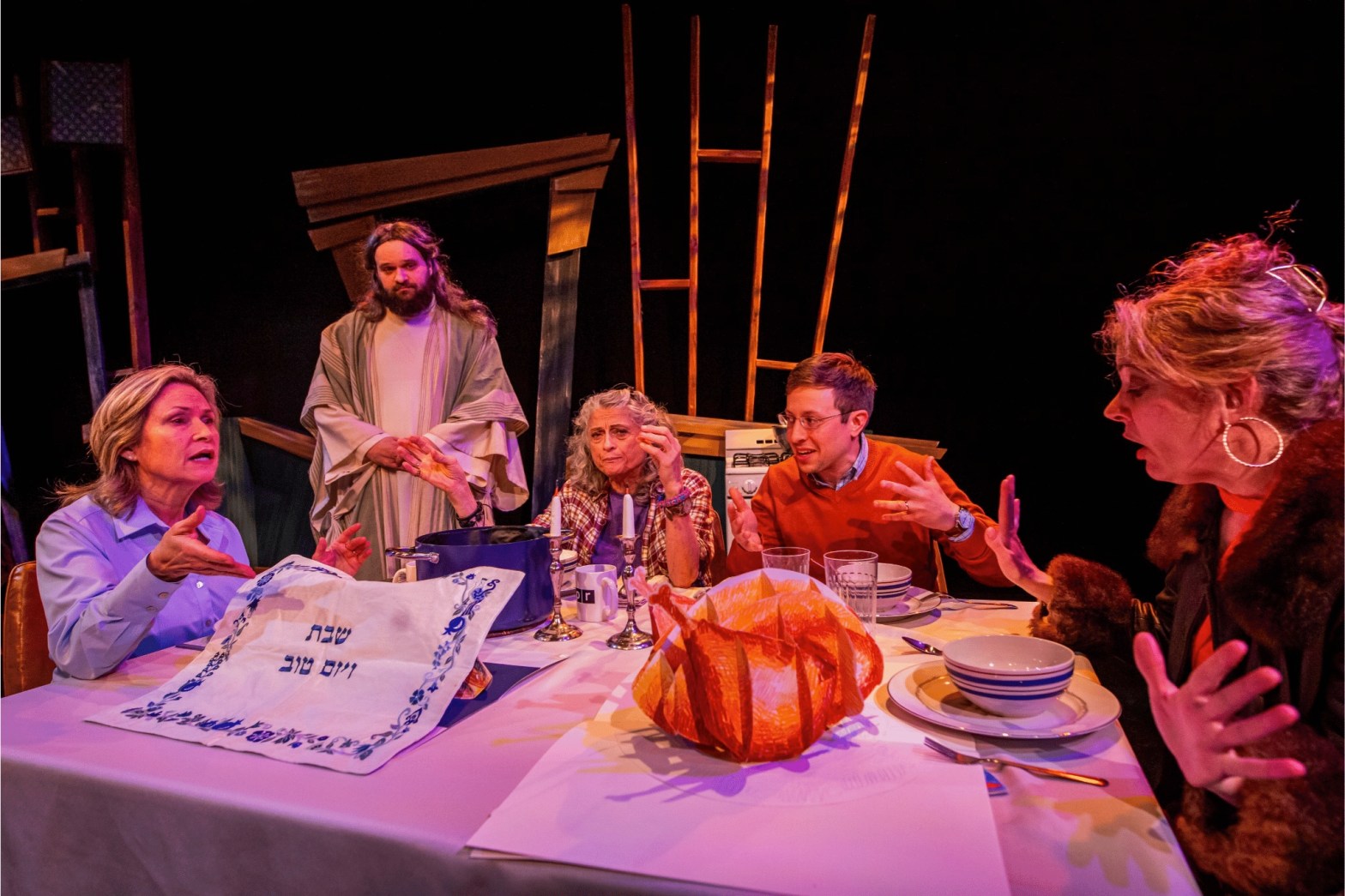
            When Nick (Adam Howard) comes to tell his grandparents about his move to Seattle, it takes him almost ten minutes to simply get a word in because they are constantly talking about so many other things. He loves them but struggles every time he is with them. They belittle the therapy he is getting. One grandmother thinks the answer to all his problems can be solved by eating her food. Though they dote on him, they are constantly meddling in his life. They come up with a plan.

            At the next Sunday dinner, before he has finalized his plan to move, they invite a young woman to dinner without telling him, hoping that their still unmarried grandson will connect, and he will not leave.

            I was not familiar with DiPietro, the playwright, though he has quite a resume. He won Tony Awards for his musical, “Memphis.”  He also wrote the book and lyrics for “I Love You, You’re Perfect, Now Change.” In “Over the River and Through the Woods” he relates the stories about the talks and bickering of this Italian American family. It is full of so many comic but real moments that resonate with families of any and all nationalities.  Their responses to his decision to leave are so much fun to listen to.  That first act of about an hour moved so swiftly, it felt like 20 minutes.

            While the second act deals with more of the issues in their lives and the struggles they have faced in the past and going forward, it is every bit as riveting as the first act. Adam Howard does an outstanding job in portraying Nick’s mixed emotions, from anger to confusion to coping to love as he tries to make his decision. Director Matthew Pfeiffer has taken DiPietro’s words and with this marvelous ensemble of grandparents (John Hedges, Linda Palmarozza, Janis Dardaris, and Joe Canuso) and has given us a smart comedy with powerful undertones.

            I highly recommend this noteworthy play. There is so much to love about it, and you will laugh while you do!

“Over the River and Through the Woods” by Joe DePietro at Montgomery Theater, 124 Main Street, Souderton, PA 18964. 215-723-9984   montgomerytheater.org   thru December 7, 2025

Wishing to Grow Up Brightly at Theatre Horizon

            A Korean-born woman, Amanda, adopted in the United States by white parents, returns home to Albany to assist her mother after the death of her father.  While cleaning up the house, since the mother wants to move out, Amanda is overwhelmed by memories of her life as a child, many of which deal with her race.  This semi-autographical musical, the story of Amanda, written by Amanda Morton, Director Matthew Decker, and Brenson Thomas is making its world debut at Theatre Horizon.

            Amanda’s parents, Jean (Marybeth Gorman) and Walt (Trey Lyford) tried to give their daughter Amanda (Sami Ma) information about her Korean culture, even sending her for a week to a camp with other Korean children. But she never thought she “fit.” As she is now pregnant, she wants to find out more about her birth mother but can no longer ask her deceased father. She wants to know why she was given up by her mother.

Amanda has imaginary conversations with her father as she tries to clean up her childhood bedroom. We even see a few flashbacks of them together. But she quickly discovers that her father did something quite unusual with the moving company reMEMOREX, a futuristic company, that is carting away the boxes. Through it, Amanda can not only read but see via AI manifestations, his memories. He made his thoughts available to her after he was gone in something called Box. Box never forgets.

            It is not easy to access the memories and often she doesn’t want to know things, but she hopes to learn much about her life that we would not usually learn after the source for that information has died. It’s a fascinating idea.

            Her mother doesn’t want any part of it and discourages it all. After all, she raised Amanda. She is the mother. She feels threatened.

            “Wishing to Grow Up Lightly” isn’t just a narration, it is a musical with the lyrics of many of the songs so profound, they could stand by themselves as poems. They were written by the playwright, Amanda Morton and Josh Totora, who was also the composer of the music. I am challenged by new songs when the band plays too loud, and it is difficult to make out all the lyrics. I do wish they didn’t amplify it as much because I didn’t want to miss a word in this finely crafted drama.  The second act, with only four songs, was more enjoyable as the story progressed.

            I would be remiss if I didn’t mention the great choreography involved with the other five actors playing multiple roles as well as shifting the set to different story locations. Director Matthew Decker has done a masterful job in working with Amanda Morton in putting together with Brenson Thomas this tale about identity. Sami Ma is outstanding in portraying the confused Amanda as she moves from reality to uncertainty and back again.  Gorman and Lyford as her parents effectively show their love for their daughter. This is very unusual story, an inventive story, that is so effectively told.  It relates to everyone who seeks connection.

“Wishing to Grow Up Brightly” by Amanda Morton, Matthew Decker, and Brenson Thomas. Music and orchestrations by Josh Totora. Lyrics by Amanda Morton and Josh Totora. At  Theatre Horizon, 401 DeKalb Street, Norristown, PA 19401, 610-283-2230, Ticket@TheatreHorizon.org  Thru November 23. 2025.

Job at Theatre Exile

It begins when a young woman comes into the office of a therapist and points a gun at him. The set turns dark for a moment, and we are not sure what is going on. Is it a flashback or maybe a flash forward? We soon see that the woman is a new patient that has been told that she must seek therapy to get back the job she’s been suspended from in the Silicon Valley because a video of her recently went viral. That is the start of the Philadelphia premier of the play, “Job,” by Max Wolf Friedlich. In the next 80 minutes of this “therapy” session, we discover the many complicated issues of Jane, that young woman.

            Her job has driven her to the brink of madness as we learn of her struggles at work and her struggles with life. It is the therapist’s job to help her. Loyd asks her a ton of questions to try to understand his patient’s issues, but she has struggled with them for most of her life (Her parents started her in therapy at the age of nine).

            Loyd became a therapist after a tragedy in his own life and he decided to make a career helping others.  When Jane shows him the video, we hear screaming and see the pained and horrified reaction of the therapist. We are not sure what he has seen. Was it obscene? Did she try to kill herself? There are many unanswered questions throughout, and that is part of the beauty of the play.

            During the session, she goes on rants. She is constantly shifting gears. She has panic attacks. She blames everyone, including the hippies and therapists for her condition. No one has ever listened to her. Loyd tries to interject with questions to get to the source of her problems but doesn’t succeed. We eventually learn that she was a content moderator for the company, and she observed so many upsetting postings that she personally tried to rectify. She couldn’t make a difference, and it drove her to this place in the therapist’s office.

            It’s hard to believe that so much could be packed into an 80-minute show as we also learn so much about her pregnancy and her troubled childhood. It makes you wonder about yourself if you’ve ever been in therapy.

            Arianna Gayle is such a scary person as she portrays the disturbed Jane so realistically. As the therapist, Scott Greer delivers another fine performance as he tries to help Jane, but also as he interacts with her when challenged. Our eyes go back and forth as we look at the expressions on the faces of these two great actors. Director Deborah Block has woven together this most complex and intense therapy session you will not soon forget.

“Job” by Max Wolf Friedlich at Theatre Exile, 1340 S. 13th St., Philadelphia, PA 19147, 215-218-4022,  boxoffice@theatreexile.org   Thru November 16, 2025

Walden at InterAct Theatre

“Walden” is a book by Henry David Thoreau, published in 1854. It’s about Thoreau’s reflecting on the simple living he enjoyed for two years while he lived in a little cabin beside Walden Pond in Massachusetts. In it, he examines the things about the society in which he lived, including individualism and nature, with self-reliance also in the forefront of his mind. It has become a symbol for retreat and reflection.

            This “Walden,” by Amy Berryman, making its Philadelphia premiere at InterAct Theatre, also takes place at a remote cabin in the woods, It is a few years in the future and the very planet Earth is in danger. A tsunami has just killed a million people while hot climates and pollution are threatening lives everywhere- except in places like this cabin in the woods and in other remote places where the air is still good. That’s where Stella (Alice Yorke) has been living with her lover, Bryan (Newton Buchanan) for the past year, living a most natural life.

Stella had worked for NASA along with her twin sister, Cassie (Campbell O’Hare), a botanist, for eight years, both hoping to follow in their astronaut father’s footsteps and become astronauts themselves. She was even in a relationship with one of her NASA coworkers until she was told that she would not be selected to go into space and left the program while her sister was selected to go to the moon for a year to find if she could grow food there. After not communicating for a year, Stella has invited her sister to their cabin.

            There are two things that follow which create the core of Amy Berryman’s play. The obvious one is the future of the world. Should exploring places like the moon and the planet Mars be a priority for government spending or should the money be used to improve life on Earth as Bryan believes? Cassie is scheduled to begin training for her flight to Mars with 20 others (on the previous journey to the planet, all the astronauts perished) to create a world there for people to eventually migrate to before the Earth disintegrates. Stella, on the other hand, is committed to life with her partner Brian, who she met in a group therapy.  He is an Earth Advocate (EA) who seeks to live without the benefits of modern technology including electricity and modern plumbing. They are in love. And though the sisters love each other, they are constantly bickering.

            This finely crafted play about the Earth is so much more as it delves into the lives of the twins. How will the sisters reconcile? Will Stella succumb to Cassie’s urging that she leave Brian and return to the space program? Will Cassie try to control Stella’s decisions? But most of all, is either sister truly happy or have they just succumbed to the idea that they have some destiny that must be fulfilled? What is destiny anyway? So much struggle within the souls of each.

            All three actors were so passionately real in presenting this profound drama. And Director Seth Rozin has done a superb job in bringing this unusual play to the InterAct stage.

As for why the play is called Walden, we learn that it was their father’s favorite book. And when Stella was working at NASA as an architect, she named the resettlement plan she had devised for the colonization of other planets, Walden.

            While on the surface, the play deals with the decision to create a place in space to flee to, there is so much sub story, filled with ambivalence, questions, and family relationships in this powerful play.

“Walden”” by Amy Berryman at InterAct Theatre Company at The Drake, 302 S. Hicks St., Philadelphia, PA 19102, 215-568-8079 interacttheatre.org  Thru November 23, 2025

Macbeth at Lantern Theater

“Double, double toil and trouble. Fire burn, and cauldron bubble.” That’s what I remember from when I read William Shakespeare’s “Macbeth” when I was in college a million years ago. It was a prophecy by the three witches while they stirred a potion that was brewing in a cauldron. They had previously prophesied that Macbeth would replace Duncan as the King of Scotland. I got a refresher of the play last year when Quintessence did a production of “Macbeth.”

            Macbeth learns from the king that he has just become the new Thane (duke) of Cawdor- one of the prophesies-and tells Lady Macbeth, his wife of the other prophecy, that he will become king of Scotland. She immediately tells him that he must kill those who are in his way, to ascend being king. How ambitious is he? Would Macbeth have acted without his wife’s prodding? Would Adam have eaten the apple without Eve’s offering it to him? Who is he really? He murders King Duncan (offstage) and Lady Macbeth is thrilled.

During the first half of the play, there is only talk of the political situation and of the many intrigues until the final scene when Macbeth kills his friend, Banquo, on stage. For me, it was too long to sit and listen to words, even profound ones, with no action. Even the three witches were not dynamic and their costumes not interesting. (The men in the play did wear handsome kilts). On top of that, nine actors portrayed some 30 different roles, and I was often confused which character they were playing, particularly when they were playing the children of the nobles.

             The second half of the play was a bit easier to follow, though I still got lost in some of the longer monologues. And I always perked up when I heard some of the classic lines- “Fair is foul and foul is fair, Out damned spot!, Tomorrow, and tomorrow, and tomorrow,”

            The original play consisted of 5 acts and usually ran over four hours. Lantern’s production of two hours and ten-minutes felt as long. William Shakespeare is considered the best playwright in the English language. I don’t know if he included stage directions for the director. I needed more feeling, more nuance, and as I said before, more action. They could have staged a more interesting movement of the forest (Macbeth felt safe since there was no way the forest was going to move and thereby undermine his position as king.) I don’t think director Charles McMahon got enough from his actors to engage the audience as much as possible. And his cast was first rate, with the likes of Anthony Lawton, Karen Peakes, J Hernandez, and Frank X.  It’s a great play, but this production was lacking.

“Macbeth” by William Shakespeare at Lantern Theater Company at St. Stephen’s Theater, 923 Ludlow St., Philadelphia, PA 19107. 215-829-0399   lanterntheater.org   thru December 7, 2025.

Fire at Quintessence Theatre

“Fire” was a journal developed in 1926 by Wallace Thurman, Langston Hughes, Zora Neale Hurston, and others to publish the works of “Younger Negro Artists” whose voices went unheard. It dared to present works dealing with homosexuality and prostitution using the more contemporary Black vernacular. It challenged an older Black generation of authors. Even the title, “Fire,” was symbolic of the burning up of older ideas. The presentation in the Quintessence production, premiering this month, was written and adapted by Marilyn Campbell-Lowe and Paul Oakley Stovall. It is a vital piece as it brings to the stage the literature of the Harlem Renaissance in New York City, of the 1920’s, during the mass migration to northern cities beginning in 1910.

            The play consists of the actors presenting six of the pieces from the journal that have been adapted by Campbell-Lowe and Stovall. It starts in the large lobby of the Sedgwick Theatre when the actors come out in costume, move amongst us and welcome us. They are eleven beautiful actors who are totally captivating.

            We then move to our seats and see that there are two parts of the stage- the back being the actor’s dressing room where the actors go and change costumes between the plays. Then, Wallace Thurman (Kaisheem Fowler-Bryant), the main organizer of the journal, whose story, “Cordelia the Crude,” is one of the six pieces presented, becomes the host of the evening.  The action shifts back and forth between the presentations and the talk in the dressing room. And therein lay my first problem with “Fire.”

            I missed most of the conversations in that dressing room because I couldn’t understand what they were saying. At the intermission, I learned that I was not alone. Everyone I talked to couldn’t make out the words spoken back there, One guy who saw I was taking some notes during the play approached me and asked if I followed the themes of the play. He told me that he was sitting in the second row and missed about 50% of the words, even when they were down stage presenting the writers’ works. And the only reason I was able to understand what was being said was because a friend who had seen a preview warned me to read the program before. She too couldn’t follow the stories because she didn’t hear most of it. I did read the superb program, and I followed the stories better.

            As for the stories, they were powerfully honest and decades ahead of their times. Several deal with skin color and the fascination of darker skinned people for lighter skinned ones.  Jealousy arose out of these issues.

            Homosexuality and bisexuality are explored in an era where these subjects were banned or ignored. Domestic violence is the subject of “Sweat.” The only piece that I found boring was the essay, “Intelligncia,” where I felt that the actor was pontificating, talking at us instead of to us.

            In the cast, there were some members who spoke clearly and projected well, while there were others, particularly Nicholas Parker, who I rarely understood. After the play, I asked some younger members of the audience if they had the same hearing issues as I- they did.

            But the faces of each were so expressive that I could see and understand their fears and desires. Watching the characters move on stage was a treat as the choreography by Polanco Jones Jr. was arresting! The costumes by LeVonne Lindsay were gorgeous, and the three-piece accompanying band was excellent, though I wish there were a few more jazz numbers from that era.

            This is an important play bringing to the public 100 years after the Harlem Renaissance, many great writings of the famous and not so famous. Perhaps a smaller space would have worked better. As it was a World Premier, I hope it is refined more. And I strongly recommend that you read the program with the short descriptions of each piece, to enjoy it more.

“‘Fire” by Marilyn Campbell-Lowe & Paul Oakley Stovall at Quintessence Theatre, 7137 Germantown Ave., Philadelphia, PA 19119, 215-987-4450, quintessencetheatre.org   Thru November 2, 2025